INFP vs ENFP: Similar Letters, Different Worlds
April 3, 2026
INFP vs ENFP: Similar Letters, Different Worlds
They share three out of four letters. They both love ideas, feel things deeply, and tend to light up when talking about something that matters to them. Put an INFP and an ENFP in the same room and they'll probably get along beautifully.
But spend a week with each of them and you'll start to notice something: these are fundamentally different people. The letters are similar. The wiring is not.
The Core Difference: Where the Energy Flows
The textbook answer is "introversion vs. extraversion" - one gets energy from being alone, the other from being around people. That's true, but it barely scratches the surface.
The real difference is in their cognitive functions - the mental processes that drive how they take in information and make decisions.
INFP: Fi-Ne-Si-Te The INFP leads with Introverted Feeling (Fi) - a deep, private value system that runs everything. Their second function is Extraverted Intuition (Ne) - the ability to see possibilities and connections everywhere. So an INFP feels deeply first, then explores outward.
ENFP: Ne-Fi-Te-Si The ENFP leads with Extraverted Intuition (Ne) - that same possibility-seeing function, but in the driver's seat. Their second function is Introverted Feeling (Fi) - the same value system the INFP leads with, but in a supporting role. So an ENFP explores first, then checks in with their feelings.
Same ingredients. Different order. And that order changes everything.
How They Show Up Differently
In Conversation
An ENFP talks to think. They'll start a sentence without knowing where it's going, discover what they believe halfway through, and somehow land on something brilliant by the end. Their conversations bounce - one idea triggers another triggers another. It can feel like intellectual fireworks.
An INFP thinks to talk. They've often already processed what they want to say before they say it. When they do speak, it tends to be measured, specific, and surprisingly precise. They might be quiet for long stretches and then say one thing that stops the room.
In Social Settings
ENFPs are often the person everyone knows. Not because they're performing - they genuinely find people fascinating. They collect friends the way some people collect books: with real enthusiasm and no intention of stopping. They can walk into a party knowing nobody and leave with three new close friends.
INFPs are selective. They might enjoy the party, but they're probably having one deep conversation in the corner rather than working the room. They don't collect friends - they cultivate a few profound connections. Being known by many people sounds more exhausting than appealing.
In Creative Work
Both types are deeply creative, but the expression looks different.
ENFPs tend toward breadth. They start projects with explosive enthusiasm, generate ideas at a rate that would exhaust most people, and often have six things going at once. Their creative challenge is finishing, not starting.
INFPs tend toward depth. They might work on fewer projects, but they go deep - revising, refining, getting the nuance exactly right. Their creative challenge is starting (or rather, feeling ready enough to start), not the depth of execution.
In Decision-Making
This is where the function order really shows.
An INFP makes decisions by consulting their internal value compass first. "Does this align with who I am? Does this feel right at the deepest level?" If something violates their values, no amount of external logic will convince them otherwise. They'd rather be true to themselves than successful by someone else's definition.
An ENFP makes decisions by exploring possibilities first. "What could this become? What doors does this open?" They still check in with their values (Fi is their second function, after all), but their first instinct is to map the landscape of options before choosing.
Where They Struggle
INFP Struggles
INFPs can get stuck in their inner world. Because Fi is so rich and detailed, they sometimes spend more time feeling about things than doing things about them. They may know exactly what they value but struggle to translate that into action, especially when the external world doesn't cooperate with their internal vision.
They can also be quietly stubborn in ways that surprise people. An INFP who has decided something violates their values will simply... not do it. No argument, no drama, just a quiet, immovable refusal. This can be a strength, but it can also mean they miss opportunities that didn't fit their idealized picture.
ENFP Struggles
ENFPs can drown in possibilities. Because Ne is always generating new options, they can struggle to commit. The next idea always seems shinier than the current one. They start things with genuine passion and then find themselves three weeks later, passion spent, staring at a half-finished project while a new one beckons.
They can also over-extend socially. Because they find so many people genuinely interesting, they may end up with more relationships than they can maintain. The result is a lot of people who feel close to the ENFP but don't realize the ENFP is spread thin across dozens of similar connections.
In Relationships
Both types want authentic connection. Both value emotional honesty. But the shape of that looks different.
INFPs want to be deeply known by a few people. They reveal themselves slowly, layer by layer, and the process of being truly understood by someone is one of the most meaningful experiences of their life. They're loyal to an almost unreasonable degree once they've let someone in.
ENFPs want to connect with a wide range of people and go deep with several. They're more open early on - sharing, exploring, being vulnerable - which can sometimes be mistaken for intimacy that isn't quite as deep as it appears. They're warm and genuine, but their attention naturally distributes across many connections.
When an INFP and ENFP are in a relationship together, it often works beautifully. The ENFP draws the INFP out of their shell. The INFP gives the ENFP a reason to go deep instead of wide. The friction comes when the ENFP's social energy overwhelms the INFP, or when the INFP's need for solitude feels like rejection to the ENFP.
At Work
INFPs thrive in: writing, counseling, design, art, nonprofit work, teaching, research - anything where they can work with meaning and have space to go deep. Open-plan offices and constant collaboration drain them. Give them a meaningful mission and some quiet, and they'll produce remarkable work.
ENFPs thrive in: marketing, entrepreneurship, coaching, journalism, event planning, creative direction - anything where they can generate ideas, connect with people, and keep things moving. Rigid routines and repetitive tasks kill their motivation. Give them variety and human connection, and they'll bring energy that's contagious.
The INFP-ENFP Confusion
People mix these two up constantly, partly because online descriptions focus too much on the "dreamy idealist" stereotype that sort of fits both. Here's the quick way to tell:
Ask yourself: when you walk into a room full of strangers, does your energy go up or down?
If it goes up - if new people are genuinely energizing and you find yourself wanting to talk to everyone - you're probably looking at ENFP.
If it goes down - if you can enjoy it but it costs you something, and you need to recharge afterward - that's more INFP.
It's not about whether you like people. Both types love people. It's about what happens to your battery.
What They Share
For all their differences, INFPs and ENFPs share something important: they both believe the world could be better than it is, and they both feel that belief in their bones. They're both drawn to authenticity over pretense, meaning over efficiency, and depth over surface.
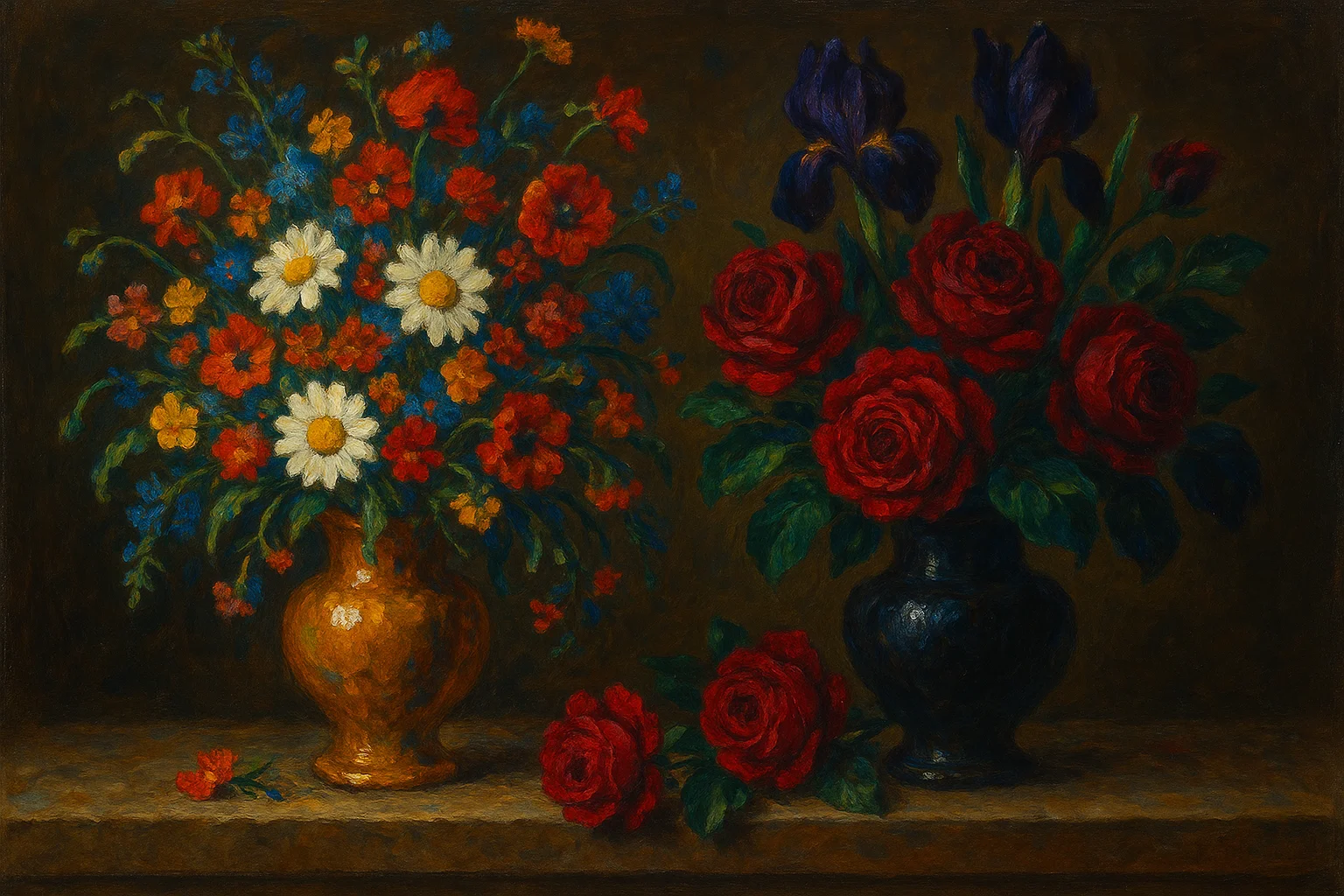
They just go about it differently. The INFP builds a quiet, deep world and invites a few people in. The ENFP builds bridges to every world they can find and brings pieces of each one home.
Neither approach is better. Both are needed. And honestly, both could probably learn something from the other.